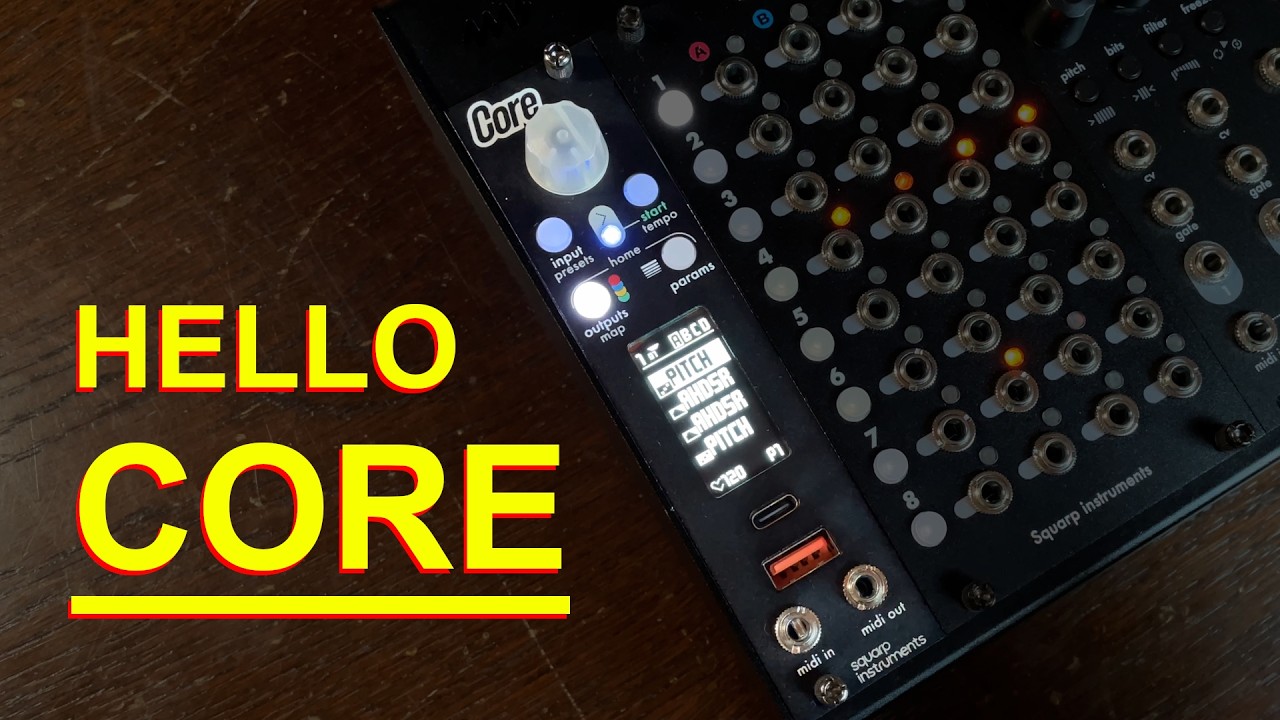
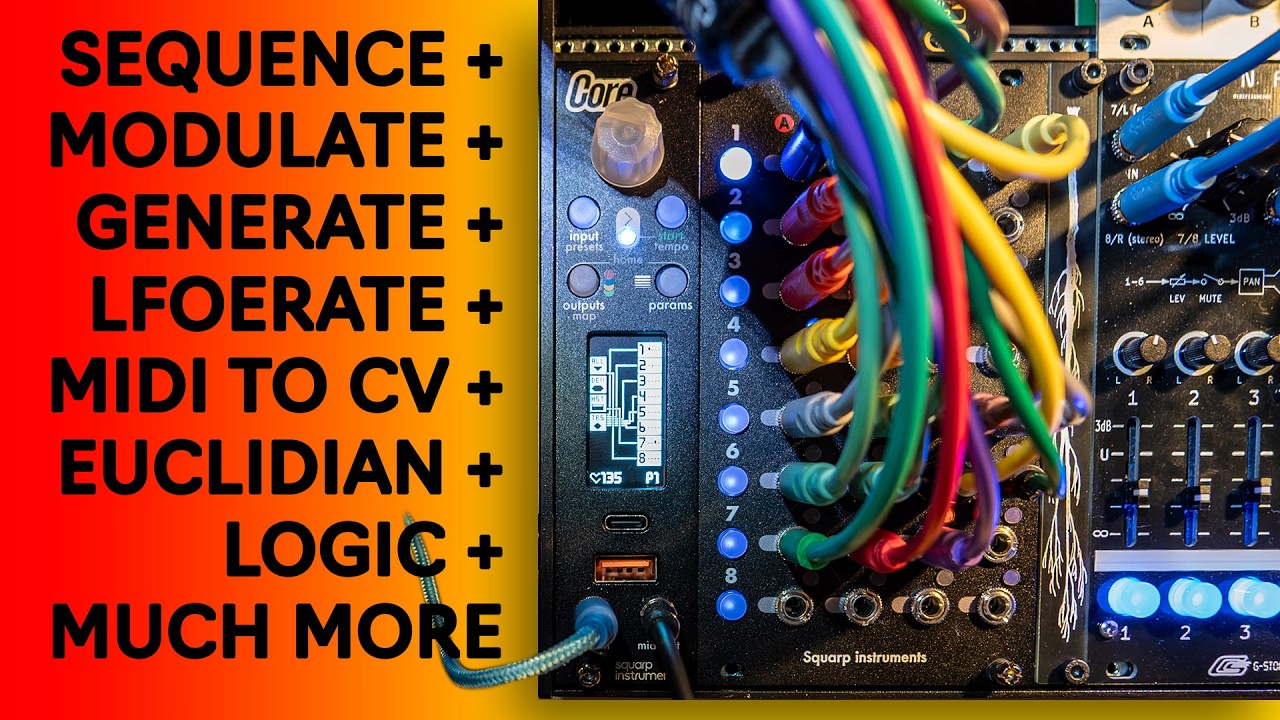
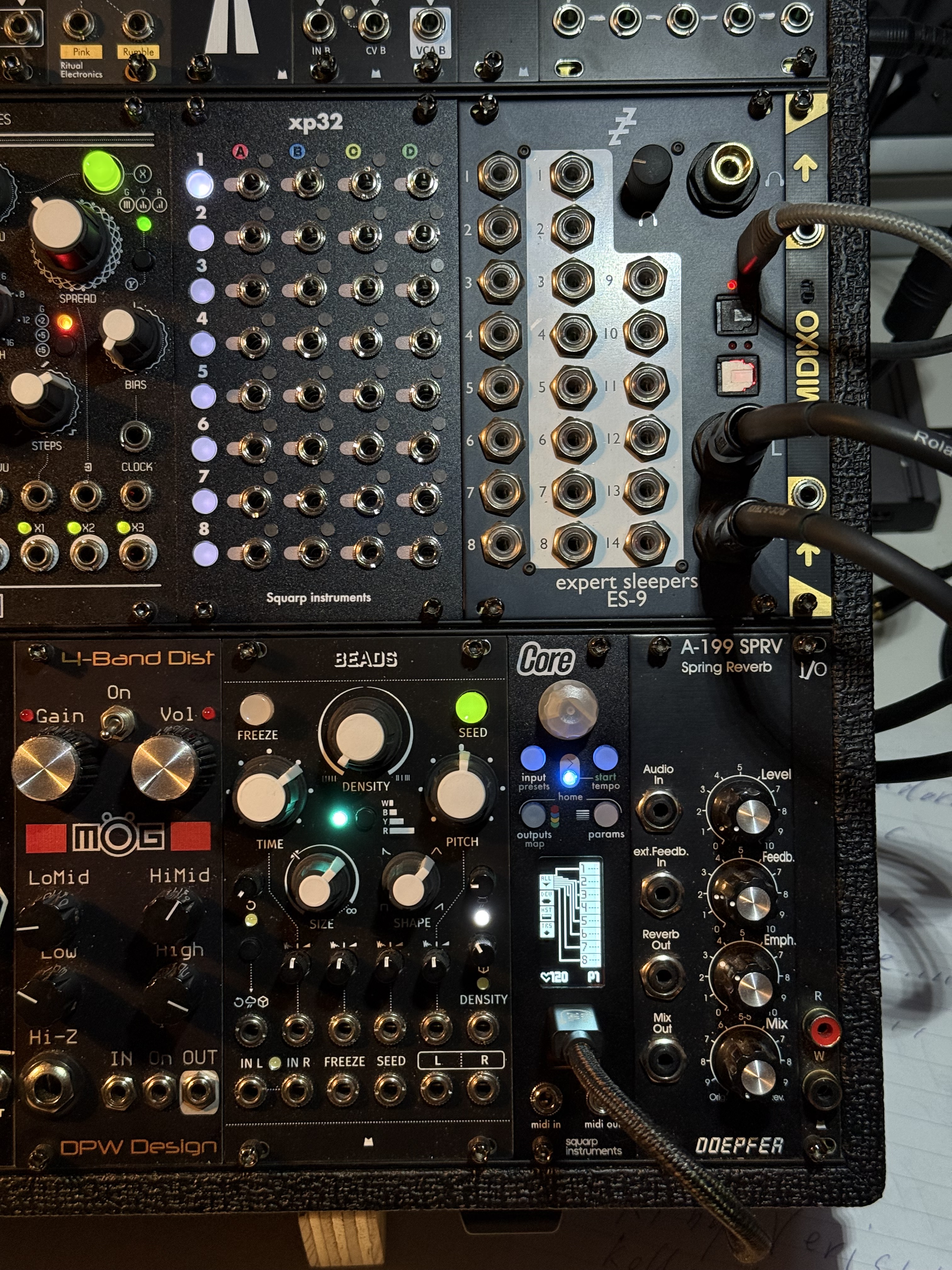
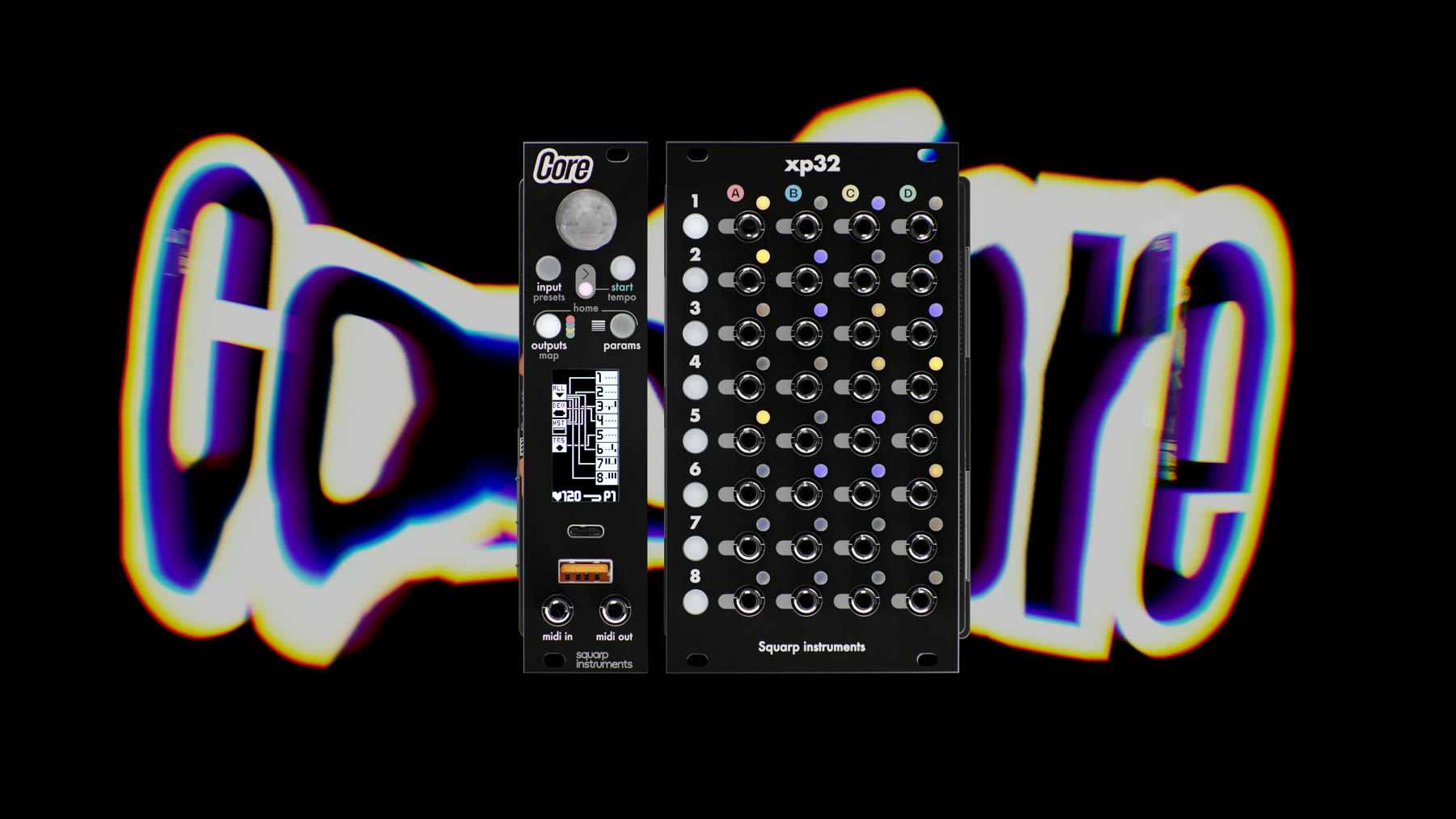
It’s a 6 HP MIDI hub. It turns MIDI into CV and Gate, and makes some of its own. With one or two xp32 it drives up to 64 outputs. Each output runs one of fourteen Engines.
It started as a bridge between a Hapax and an xp32. We gave it two months. Then the Engines started piling up, because writing them was a lot more fun than writing a bridge. Two years later it plays on its own. It’s still not a sequencer. We checked.
What it does
MIDI in from USB Host, USB Device and TRS, all merged. A DAW, a sequencer and a keyboard can play the same rack at the same time.
Voltage out on the xp32’s 16-bit DACs, from -10 V to +10 V.
Its own clock. LFOs, envelopes, euclidean rhythms and melodic loops keep running with nothing plugged in.
8 global presets. Each one holds the whole rack, all 64 outputs. Recalled instantly, also by Program Change.
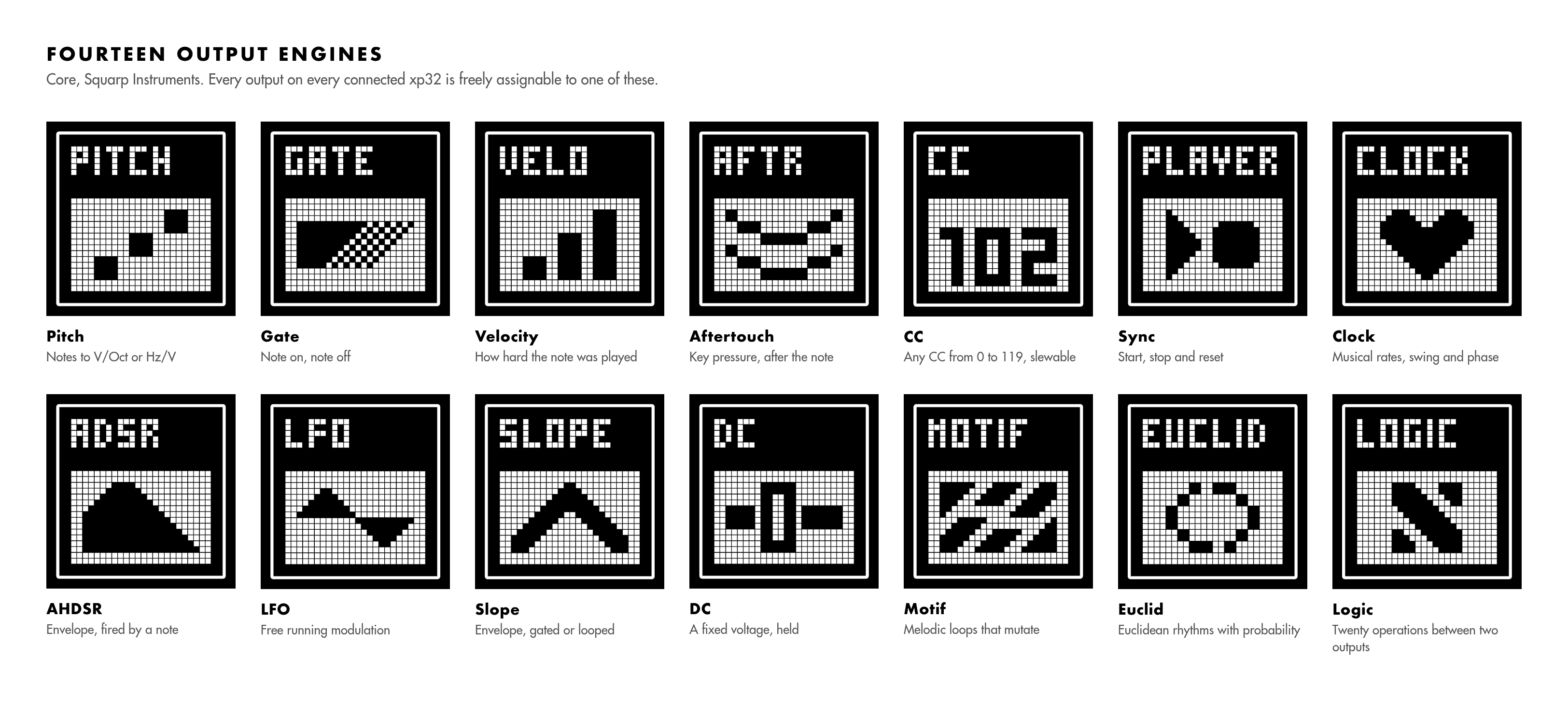
The fourteen Engines
Every output on every connected xp32 runs one of these.
Very cool! This does a great job of taking the modular brain parts of hermod and putting it into a smaller format.
I have a niche question, is it possible to enable/disable scale notes with midi or only via the screen+encoder? I’m thinking about the possibilities of how controllable Core is via midi beyond just the engine parameters.
I bought one directly, plus a second XP32. I’m still wondering, though, about running 64 CV outputs simultaneously. Are there any performance issues? Will there still be a need to optimize performance?
Can @squarpadmin detail how the Hapax can best interact with Core/XP32 to have the least latency. I suppose USB over MIDI. What is the tested latency/limitation with 1 or with 2 XP32? Will there be a proprietary connection protocol between Hapax and Core to permit a smart interaction? What is on the Core roadmap?
Just got my Core + xp32 bundle yesterday and it’s awesome. I could easily see myself expanding to another xp32. One wish, and I may have missed it if it’s already possible, is copy and pasting settings. There are times when I want to start with the same ahdsr or lfo across multiple outputs and then minorly adjust each of those instead of just taking the outputs to a mult.
@Acidity USB is the way to go between Hapax and Core: fast and reliable. I would avoid DIN for this as the bandwidth is limited, especially if you drive lots of outputs. Core processes everything coming in (USB host, USB device or TRS) every 0.5 ms, and each xp32 has its own bus, so a second one doesn’t slow the first down. We didn’t plan any smart interaction between Hapax and Core so far, but you can already do a lot over plain MIDI!! About the roadmap, we’re waiting to see what people do with it for now :).
@gundorf sounds like you answered it yourself with your 2 xp32!
@Bobbfett there’s no calibration procedure on Core: the voltages come straight from the xp32’s industrial grade 16-bit DACs.
@gonzofar most of the Engines already exist on Hermod+ in another form, as effects (LFO, envelopes, euclidean…). I agree that some of them are missing though.
@seven10 what I do myself is copying the whole track : hold the source track button, then press the destination track. It copies the 4 outputs with everything (engines, settings…), shoudl work from one xp32 to the other. Copying a single output isn’t possible for now
Eagerly waiting for mine to drop in, The calibration is most likely excellent, but it would be nice as a feature request. Being able to calibrate or offset calibration points in a few of the first 8 cvs would open up for fine tuning them to my oscillators tracking, dedicating one or two cv outs for their quirks.
First impression after an hour of testing.
Where have you been my whole euro life, Core!! Amazing tracking, playing it with my minimod oscillators, which tracks best in my rack, and its pitch perfect, no calibration needed. Super precision and resolution on everything, and with slew if you want.
Extremely easy to setup, and all settings are there, amazing. And so easy to customise everything.
I luv all the features, Ive had the Hapax, and this has all the customisations, this fits me perfectly, amazing module.


 1000x mercis.